Cedric & Odious: Tactical dark fantasy RPG with moral tension
Cedric & Odious, from Tameem Hamoui, casts you as a resurrected warrior king bound to a corrupt sorcerer, tasked with surviving and recovering fragmented memory while forced into service. The game focuses on tactical action combat blended with environmental puzzle elements, plus an artifact system that alters loadouts and options. Its retro pixel presentation and story-first structure aim at indie players who appreciate deliberate encounters and moral complexity.
A king's servitude frames exploration and choice
So, you awaken under another's control and every objective carries a personal stake. The master-servant relationship centralizes motivation: recovering Cedric's memories and the vanished camaraderie with the sorcerer change how quests unfold and how NPC reactions land. Narrative beats are not mere backdrop; they reroute player intent and make investigative exploration into a primary driver of progress rather than an afterthought.
Combat emphasizes positioning and inventive item use
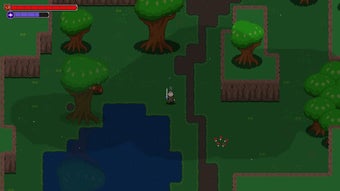
The action loop rewards measured timing and battlefield reading, combining melee, ranged, and arcane options to avoid brute force. Environmental features provide elevation and choke advantages for players who exploit terrain, and an explicit artifact system offers passive and active modifiers, such as spell-breaking rings and explosive potions. Mixing artifacts with elemental abilities is a deliberate design choice that increases tactical options against human, wildling, and demonic foes.
Presentation and technical build suit indie desktop players
The developer built the title in Godot over roughly five years, resulting in a handcrafted pixel aesthetic applied to grim, detailed zones. Controls accept both controller and keyboard/mouse input, giving players choice in preferred setups. The Mac build is tuned for Intel and Apple Silicon M1 hardware, which aligns the technical package with desktop users prioritizing stable performance on modern Mac machines.
Progression and community response support repeat experimentation
Progression ties narrative discovery to tangible upgrades, encouraging players to chase artifacts and memory fragments rather than only level grind. Difficulty skews toward tactical challenge; community feedback notes the combat as challenging but fair, highlighting the strategic depth and the art direction. Those elements combine to encourage multiple runs and different builds rather than a single linear completion.
Cedric suits players who prefer consequence-driven, deliberate play
Cedric is a solid choice for players who favor focused narrative tension and methodical encounters over casual arcade action. The design asks for time and attention, rewarding experimentation and careful decision-making. Note that macOSor later, an Apple M1 or Intel Core M processor, and at least 8 GB of RAM are required, so older desktop Macs may be excluded from the intended experience.